The Benefits of Having Plants in the Office

officeplantsObtaining an office with a window is one of the key rungs people reach for as they ascend the corporate ladder. But when it comes to trying to trick yourself into thinking you’re working in a more natural environment, why set your sights on a window? No panes does not have to equal a painful work experience. Just because you have to be stuck inside all day doesn’t mean it has to feel that way. One of the best ways to spruce up a workspace is through a healthy array of plants.

On a surface level, plants brighten up what is oftentimes a pretty lifeless environment. It’s easy to get sick of the drab gray and white tones that often cover the cubicles and furniture in an office. Plants offer vibrant colour that can actually affect the mood of those around them. Think about it: if you worked in an office that was flora free, you’d be green with envy of your mate’s plant-filled building.

There are far more benefits to adding some nature to your workspace than simply ones that catch your eye. Plants actually have several different health benefits that can’t be seen. More greenery leads to a cleaner environment, as chemicals and processes in plants help remove harmful particles from the air, purifying it and leading to a more pure atmosphere.

The scientific superiority of decorative plants doesn’t stop there, though. Seeing pots of leaves, stems and flowers can actually make you enjoy coming into work more. Now, don’t get your hopes up. Plants aren’t going to write that report for you, or reschedule your Friday afternoon meeting with that annoying client from the west coast. But some natural accoutrement can help you in other ways.

indoorplants2

Studies have shown that there is a direct correlation between office attendance and the number of plants employees can see. Workers that had more vegetation in their line of sight took fewer sick days than those whose work environments were plant free. Employees also completed computer tasks more quickly in rooms in which plants were present.

In addition to the aforementioned cleaner air around plants, researchers suggested that just seeing healthy-looking plants can possibly make people evaluate their own health in a more positive light. This can be partially linked to how different colours affect your mood.

It’s long been known that the brain associates certain feelings with different colours. For example, bright colours such as red, yellow and orange can often stimulate and increase heart rate. In general, brighter colours (such as, say, the ones found in certain plants) lead to brighter, more alert feelings. Conversely, the colour green has been known to lead to feelings of refreshment or relaxation, notions that are sometimes hard to come by in a high-stress environment.

Vegetation has the power to plant seeds of positive thought and productivity into your brain without you even knowing. It can also have a more tangible effect on the air you breathe as you attempt to juggle calls, meetings and deadlines. There’s bound to be several different types of growth when indoor plants populate the office.

beeburnellAbout The Author: Bee Burnell

Bee is an Australian blogger who loves writing about all things environmental, eco friendly and green, green, green. In his spare time it’s all about Sydney Swans and hitting the hairdressers.

Add Value And Style To Your Backyard With A Shed

shedIf you don’t have a shed in your backyard, think about what your life could be if you had one. A shed is a home just outside of your home. It’s a place where you can take time out, complete hobbies and projects, store things you don’t want or can’t have in your house, and just generally maximise the potential of your home by backing it up with the secret weapon of a shed. It will revolutionise your DIY projects completely. That, and you will enjoy your shed. The shed can also be a spiritual home of community and mateship. It can become a place where you have friends over. Steelchief sheds and barns make sheds in all shapes and sizes. The right shed can add value to your house. Because the definition of a shed is so varied and so variable that you don’t really know what’s a shed until you’ve seen one. If you want a shed that’s five pieces of timber propped together, then that’s a shed. If you want something with three rooms and two levels in reinforced steel that has an electricity connection, then do that. Putting windows in is good, because it will provide you with ventilation if you’re doing a project that creates dust or fumes, you have to be careful about what you breathe in. Joining your shed to you garage is a great idea, it will permit you more storage space and it will mean that it can all be incorporated into the single structure, which is space-saving and economical.


ivydelfinIvy Delfin is a copywriter working with SteelChief, the leader in design and manufacture of garden sheds, workshops, garages, pool sheds, aviaries, fowl houses, cubbies, dog kennels, pet runs, small sheds, timber sheds, steel frame sheds and pump houses for over 20 years. When Ivy’s not writing content she enjoys swimming, shopping and taking her dog for a walk.
Sponsored Post

How To Turn Your Brown Thumb Green

deadplantIn the gardening world people tend to be divided into green thumbs and brown thumbs. Most people think they are either one or the other and this is their lot in life. Green thumbs are just naturally good at gardening. Brown thumbs are people who don’t grow plants very well and are without hope of ever having a garden they can be happy with.

So what is this secret then that green thumbs know and don’t want to share with the world?

The secret is pretty simple really;

Being a Green Thumb is a mindset!

You read that correctly. I fully believe that being a green thumb is a mindset and not something you are simply born with or without. And if you believe you are a brown thumb I believe the first step you need to take to grow a better garden is to change your mindset.

With that in mind, I have one very important revelation to tell you to start your mindset overhaul.

Green Thumbs kill plants too!

What you do need to have to start changing your mindset to that of a green thumb is a solid understanding of what a green thumb actually is. My definition is

“a green thumb is someone that learns from his or her gardening mistakes!”

Yes, that is right, I actually believe the only difference between a green thumb and a brown thumb is, at the end of the day, they learn from their mistakes and how they approach their garden afterward.

How A Brown Thumb Turns Green

In my gardening role at Aussie Green Thumb I have had many clients from the more experienced generation. These clients have lovely, sprawling gardens that traverse the lengths of their properties. Many of these gardens are no longer in their glory days because age has got the better of them.

As I talk to these clients I realise how little, comparatively, I know about gardening. Don’t get me wrong, I consider myself to be a green thumb, but I am a young green thumb with much learning to do.

These clients are so very wise in the ways of gardening and would definitely be referred to as green thumbs. However, they still have plants die. They have always had plants die.

“Is there perhaps a misunderstanding about what a green thumb really is?”

Sometimes when people are new to gardening, or are trying once again to get into gardeninf, get quite distressed at their initial inability to grow plants. They automatically apply the brown thumb tag to themselves and give up on the garden because of this and hit the escape key on their gardening dreams.

I myself have been gardening for most of my life. I can tell you right now, I have lost track of the number of plants that have either died for some obscure reason or other, or, quite frankly, the number of plants I have outright killed. Yes, that is right, Mr. Aussie Green Thumb has killed plants!

So, if this is the case, what really marks the difference between a brown thumb and a green thumb? Simply how you approach your garden when something does go wrong. When a green thumb has a plant die, they start to ask themselves a lot of questions. Now, the questions they ask depend on their depth of knowledge. A 10-year old green thumb will ask very different questions from a 70-year old green thumb. But they ask questions just the same.

A green thumb will investigate and try and determine the cause of death, almost like undertaking an autopsy. Was the plant over-fertilised? Was the plant under-fertilised? Was the plant over-watered or was the soil unable to absorb water? Was the plant under-watered? Was the position of the plant in too  much sun, too much shade? Was the plant simply old? A green thumb takes the death of a plant and doesn’t take it personally, they simply take it as an opportunity to learn. A brown thumb on the other hand will likely chalk up the death of the plant as yet another ‘attack of the killer brown thumb’, referring to themselves.

I remember a while back, when I was quite new to Australian native plants, I had a beautiful Red and Green Kangaroo Paw. I knew that plants needed to be fertilised so I went out and bought some fertiliser. Now, though I wasn’t new to gardening, I was new to natives, and so didn’t really know what you need when growing natives. I bought a fertiliser that was high in nitrogen, phosphorous and potassium; a standard fertiliser. I then applied this to my Kangaroo Paw. About a month later, my Kangaroo Paw was dead.

What happened? Well, what I didn’t know was that Australian soils have traditionally been very lacking in phosphorous. As such, Australian natives have generally got away without needing much of this nutrient and many have, in fact, become very sensitive to it. The fertiliser I used had too high a concentration of phosphorous and this actually killed my Kangaroo Paw.

Did I come away from this experience and chastise myself as being a brown thumb?

Did I take this personally and suggest to myself that I was a horrible gardener?

Where To From Here

If you consider yourself to be a brown thumb then I would suggest the first thing you need to do, in order to become a green thumb, is to stop thinking of yourself as a brown thumb, and start thinking of yourself as a green thumb in training.

Like I said above, I have been gardening all my life, yet there are still times I am finding friends who don’t really garden at all who know more about some gardening topics than I do. This doesn’t disqualify me from being a green thumb, it just highlights areas in which I still have much learning to do .

When you come across an issue in the garden, see it as an opportunity to learn. Jump online and do a little research. Perhaps read a few books on the issue. Make friends with other local green thumbs who are perhaps further down the garden track than you and ask them questions.

Take the opportunity right now to change your mindset and realise that if you are to ever have the garden you actually desire, you need to believe that you can actually achieve it and set about learning what you need to.

Yes, some people pick up gardening really quickly while others take time to get there. However, I am yet to meet someone who hasn’t eventually realised the green thumb inside when they persevered.

Cultivating a gardening lifestyle is all about the way you look at things. If you see a plant dying and your first thought is ‘I’m an awful gardener,’ then you have actually lost the first battle. Thankfully, if this is you, you have not yet lost the war.

Being a green thumb is a mind set

As a gardener, you just need to see challenges as an opportunity to grow, which is a useful concept when tackling gardening. As you learn to grow plants, you will learn to grow within yourself and discover that, with a little perseverance, and often times a dash of luck, you can have the garden that you desire.

Green thumbs can be born over night, but honing the green thumb skill takes a lifetime. Whether you are thinking of yourself as a green thumb for the first time or if you still think that you are well and truly a brown thumb, I’d like to encourage you to keep going, take a chance, experiment, and most of all, learn from the mistakes that you make.

Gardening is fun. Learning about gardening should be fun, too. Don’t expect a TV-style garden overnight, give yourself a few years to really get a hold of the gardening trade.

Besides, but I have seen a few TV gardens a year after the fact, and they don’t all still look like they did when on TV. So, cultivate a gardening lifestyle, learn lessons from your mistakes, and you too can become an Aussie Green Thumb.

How To Design a Garden for Sydney’s Climate

DaveWhen designing a garden one of the first considerations is the local climate. – Sydney’s climate is temperate to sub tropical. This climate affects how you landscape for Sydney gardens and especially what plants to grow.

Sydney has a temperate climate with warm summers and mild winters. Rainfall is spread throughout the year. The weather is moderated by proximity to the ocean, and more extreme temperatures are recorded in the inland western suburbs. The warmest month is January, with an average air temperature range at Observatory Hill of 18.6–25.8°C. An average of 14.6 days a year have temperatures of more than 30 °C.

In winter, temperatures rarely drop below 5 °C in coastal areas. The coldest month is July, with an average range of 8.0–16.2°C. Rainfall is fairly evenly spread through the year, but is slightly higher during the first half of the year, when easterly winds dominate. The average annual rainfall, with moderate to low variability, is 1,217mm, with rain falling on an average of 138 days a year

Sydney Landscape Garden Design Elements

Sydney gardens are heavily focused on outdoor living. There is generally a large outdoor area dedicated to entertaining and hanging out and enjoying the sun and outdoors. Pergolas and paved areas are common place in the Sydney landscape garden. Adding to the outdoor appeal is the strong use of water features. Water has a soothing effect both visually and aurally. The sound of a gently trickling water feature is most relaxing.

Sydney Landscaping also often involves an informal relaxed layout with the use of curves and rounded garden beds and structures. Plantings are also often relaxed groupings rather than straight hedges.

Australian gardens have a certain feel, a sense of place,  and there are many elements that help evoke this sense of place. Here are but a few of them

1. Natural plant groupings –  your plants should be clumped as they would be in nature, use random groupings, numbers and arrangements.

2. The use of timber helps give a sense of Australiana, timber sleepers, timber steps, timber decking all help achieve an Australian Native feel. Crushed granite, or sandstone is another lovely garden element to include in a native garden, it gives a soft appearance to garden pathways. All these elements can be easily achieved by a DIY gardener.

3. Natural stone is often used in an Australian Native landscape. Sandstone can be used in a number of ways, as stepping stones, stone walls or simply as feature boulders in the garden to add strength to the layout and design.

Sydney Landscape Design

Ensure that your landscape design is an open, free form style. Avoid rigid straight lines and formal hedges. Try and add contrasting clumps of foliage to create interest and excitement to the planting design. Native grasses planted in clumps is a lovely effect. Winding, flowing pathways and garden rooms add a sense of intrigue to any garden. Pathways are often made up of natural stepping stones, or recycled sleepers to give an added rustic feel. A dry river bed or creek is another interesting element that can add some interest to your garden layout. River pebbles laid out to mimic a river bed is a simple and effect landscape feature.

Common Native Plants for Sydney Gardens

Here is a list of some common Australian native plants that grow well in Sydney – including native trees, shrubs, grasses, under story plants and ground covers;

Eucalyptus
Grevillea
Wattle
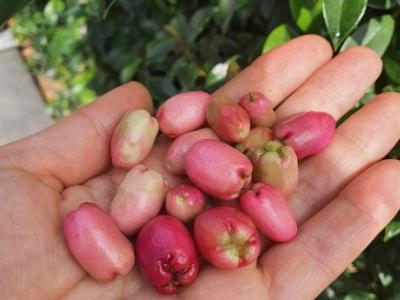
Lilly Pilly
Bottlebrush
Kangaroo Paw
Gymea Lilly
Carex Grass
Lomandra
Native Violets
Blue Fescue Grass
Westringia
Austromyrtus
Angophora
Grass Trees

About the Author

Dave2Dave Limburg – I am a professional landscape designer with over 15 years of landscape design experience. I run Online Garden Design offering an Australia wide custom landscape design service and DIY guides online. We create unique garden design based on your wants and needs, and show you how to build your own garden with our complete do it yourself guidelines, or alternatively our design packages can be used for contractors to quote from and build off.

Simple DIY Irrigation Kit

If you have ever had someone come and quote on your reticulation job you will understand this statement; Reticulation is expensive. Many people just wish there was a simple, DIY option for some of their irrigation needs. Well, the good news is, there is! I was recently afforded the opportunity by the trusty people at Pope to check out one of their new products, a Raised Garden Bed Irrigation Kit and I was very impressed.

Simple Design & Installation
What stood out to me first about this product is just how simple it was to put together. Admittedly I have a little experience with reticulation but everything included just made ‘sense’. If something looked like it should go somewhere…it did. It was then a simple cases of sticking the sprinkler spikes in my desired locations and then attaching the hose. Simple.

Great Features
The Pope Raised Garden Bed Irrigation Kit allows you to easily customise it for your watering needs.

> The flexible poly tube comes in one length which means you can cut it to the lengths that are needed for your particular location.

> The water flow to a particular tube is turned off and on with a screw driver (or other tool with a small, flat end) on the manifold.

> The actual sprinklers are fully adjustable. They can either be set up to spray over a diameter of roughly 1m or they can be made to act as drippers, just allowing a small amount out at any time.

Multiple Uses
Though this product is billed as being for a raised garden bed, it really has many uses. You could use it to water a larger, ground level garden bed fairly easily. You could use it to water 2 raised garden beds that are close together. You could use it to water a couple of smaller garden beds or you could do what I have done and used it to water my pot plants. I have 5-6 different pot plants out near the front door of my house. As the manifold comes with 6 sprinklers I have simply spread them out over all my pots and now have a simple, effective way or watering my pots on reticulation days. And it only took me about 15-20 minutes to set up!

The Last Word
This really is a fantastic, simple solution for your smaller reticulation needs. It wouldn’t work for large scale needs but if you have a couple of raised veggie beds, an area for pot plants or a smaller flower bed, the Pope Garden Bed Irrigation Kit is a fantastic DIY solution. Bunnings sells these kits for $22.98.


No more ‘Hire Me’ section?

flowers

Photo: Alfred Borchard

Since 2010 I have been providing a physical part-time gardening service within Perth, Western Australia. I have enjoyed helping people cultivate a gardening lifestyle, improving their gardens bit by bit. However, I have recently taken on a new job in a different field which no longer gives me the time to complete part-time gardening and as such am no longer available to be hired for work.

Don’t panic! AussieGreenThumb.com isn’t going anywhere. I will continue to provide hints, tips and traps for everyday people through the website. In fact, I am hoping to ramp up the website hints and tips aspect, now that I won’t be as busy actually gardening.

Thanks to all my valued customers. I hope and trust your gardens are all better now than they were when I first started working with you.

Here’s to your gardening success!

James from Aussie Green Thumb